Allen Countians will head to the polls to decide the fate of a proposed half-cent sales tax that, if enacted, would go toward funding Allen County's ambulance services.
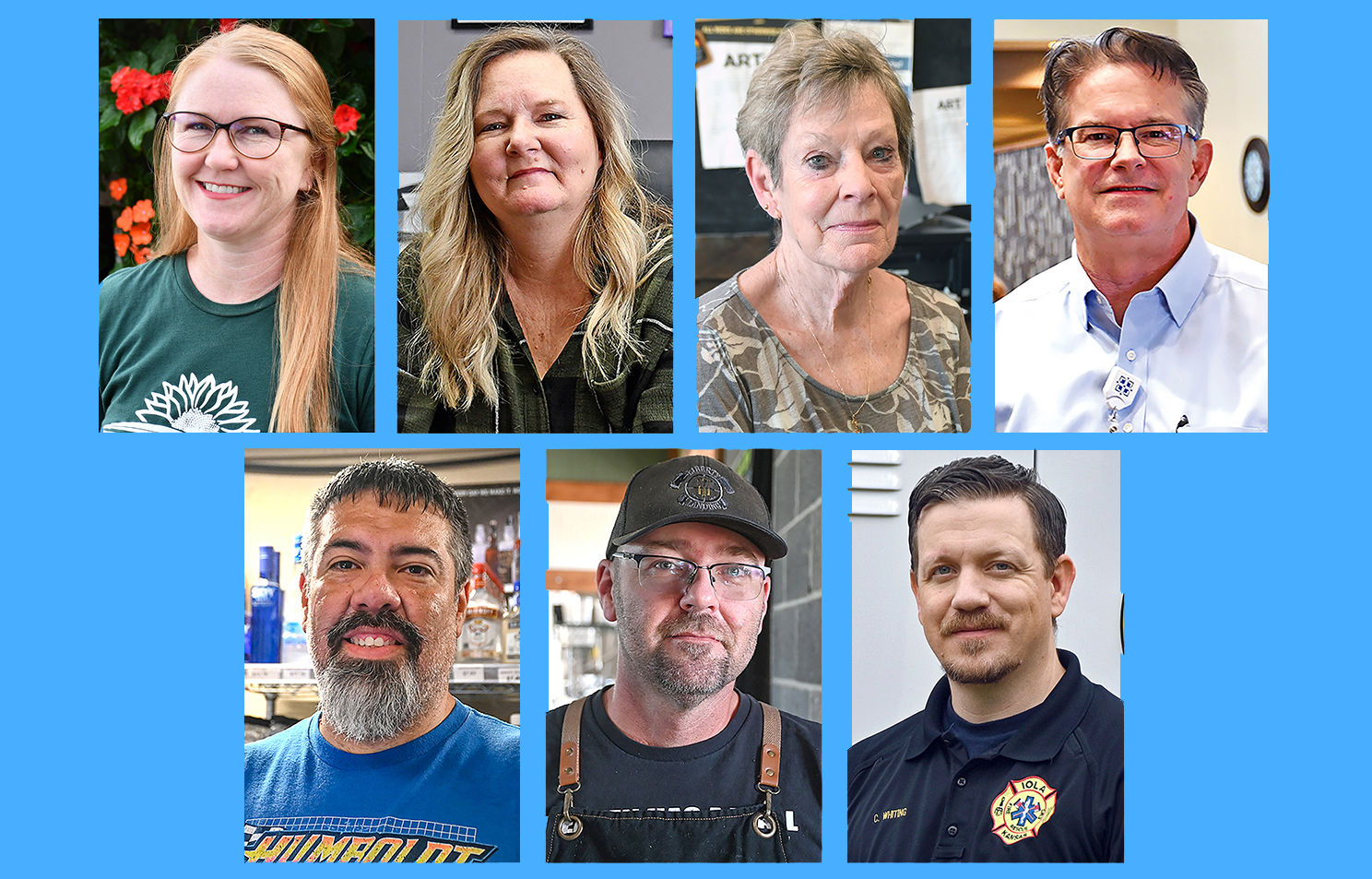
The Register spoke with several Allen Countians about their opinion of the upcoming sales tax referendum, which if approved, would help support Allen County’s ambulance service. Among those responding were, top row from left, Savannah Flory, Gari Korte, Georgia Masterson, Pat Patton, Brian Shaughnessy, Jay Stogsdill and Colter Whiting. Photo by Sarah Haney / Iola Register
Allen Countians will head to the polls to decide the fate of a proposed half-cent sales tax that, if enacted, would go toward funding Allen County’s ambulance services.
Allen County voters will have another opportunity Nov. 3 to decide whether to approve a countywide half-cent sales tax to help fund emergency medical services. The proposal comes two years after voters narrowly rejected a similar measure, with 52% voting against it in 2024.
According to the county, the proposed tax would generate an estimated $1.3 million annually, providing a new source of revenue for the county’s ambulance operations. If approved, the tax would take effect in April 2027 and remain in place for five years, ending in 2032 unless voters agree to extend it.
The county estimates the tax could eventually reduce property taxes by nearly 6 mills, or just over $1.2 million, but have stopped short of committing to a specific reduction.
Emergency medical services in Allen County are currently funded by three main sources: property taxes, insurance and patient payments, and motor vehicles taxes.
THE PROPOSAL has drawn differing opinions from local business owners and community leaders.
Jerry Sigg, owner of JD’s Automotive in Iola, said he understands the need for health care but is frustrated with the overall tax burden facing residents and businesses. “I can’t imagine this thing passing,” Sigg said.
He pointed to increases in personal property taxes and other expenses, saying he believes the county has already pushed costs too high. “I can understand property taxes being up a little bit, but 50% up,” he said. “I mean, it’s off the charts right now.”
Sigg agrees that emergency services are necessary. He’s worried, though, that another tax will add to an already difficult financial situation. And he’s skeptical property taxes would return to previous levels simply because a new revenue source becomes available.
“Let’s take gasoline that starts out at $1 a gallon. They raise it to $3 a gallon. Then they lower it to $2.50, and everybody thinks it’s great,” Sigg said. “It never gets back to where it was.”
He also expressed concern about how rising costs affect housing and families trying to establish themselves financially. Construction expenses, labor costs and property taxes can make homeownership increasingly difficult, he said.
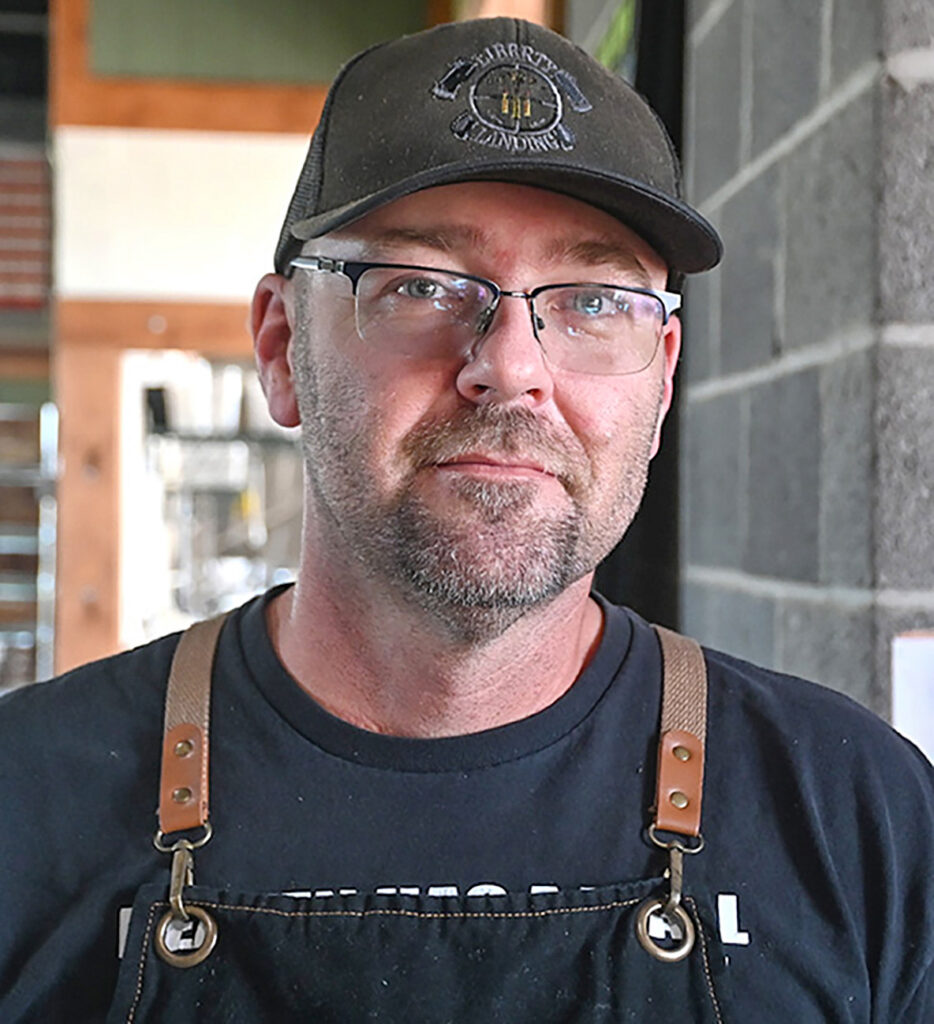
Jay Stogsdill
JAY STOGSDILL, owner of Liberty Landing restaurant, shares concerns about the tax burden. He wants commissioners to provide a clearer explanation of why the additional revenue is necessary. “Personally, I think taxes are too high in this county,” Stogsdill said.
He said commissioners should give voters a detailed budget and explain how the money would be spent rather than simply asking for more funding.
“Maybe put out a reason why,” he said. “And maybe show the whole budget for EMS and show why they need the half-cent, versus just saying they need it.”
Stogsdill worked as an engineer at Gates for 26 years before launching Liberty Landing with his wife, Sarah. He said businesses cannot simply raise prices whenever expenses increase or sales decline. They must evaluate their operations and find ways to manage costs.
STOGSDILL ALSO referred to an ambulance grant opportunity recently turned down by the county. He questioned why taxpayers should be asked to fund equipment if an opportunity to obtain it through outside assistance is declined.
In June, Allen County commissioners declined to move forward with a last-minute grant application for a heavily discounted ambulance, citing concerns over ownership requirements.
The grant would have required only a 5% local match. Based on the current cost of a new ambulance — roughly $350,000 — it was estimated that the county’s share would have been about $17,500.
However, the grant required a fire department to serve as the lead applicant. This meant the ownership of the ambulance would remain with the city if the grant were awarded.
“If the county does not end up with it at the end of the day, and the city is interested in doing it, then let the city pay that sum,” Commission Chairman David Lee said at the time.
As a business owner, Stogsdill said, he cannot respond to declining sales simply by increasing prices. “I’ve got to figure out things to do to get people to come back.”
Stogsdill said the additional tax might not necessarily cause customers to stop spending money altogether, but it could leave them with less to spend elsewhere. People will continue to eat at restaurants, travel and purchase goods, he said, but may cut back on other expenses as costs increase.
Pat Patton
FOR SUPPORTERS of a sales tax, the fact that it also applies to visitors passing through Allen County offers a potential advantage over relying solely on local property owners.
Pat Patton, administrator of Allen County Regional Hospital, said that is one reason he sees value in the proposal. “We have so many people who come through our community but don’t live here,” Patton said.
Those travelers also rely on emergency services in the event of vehicle crashes or other incidents, Patton noted. A sales tax would allow people who live outside the county to contribute toward those services when they make taxable purchases locally, he explained.
“It’s only fair for those folks passing through here to help with that cost,” Patton said.
Patton said additional funding could also help address staffing shortages, particularly the need to recruit paramedics.
Allen County Regional Hospital operates EMS in neighboring Anderson County, giving Patton a perspective on the challenges facing emergency medical services in the region. Paramedics are in short supply across the industry, he said.
Paramedics play a critical role in ambulance operations, particularly when patients need to be transported to larger medical centers for cardiac care, trauma treatment or other specialized services.
Patton said additional support could help improve wages and make it easier to recruit qualified personnel.
He also said reliable emergency medical services affect whether people feel secure living in a community and whether businesses consider locating there.
“I think it offers a sense of security that is kind of natural for people to wonder about.”
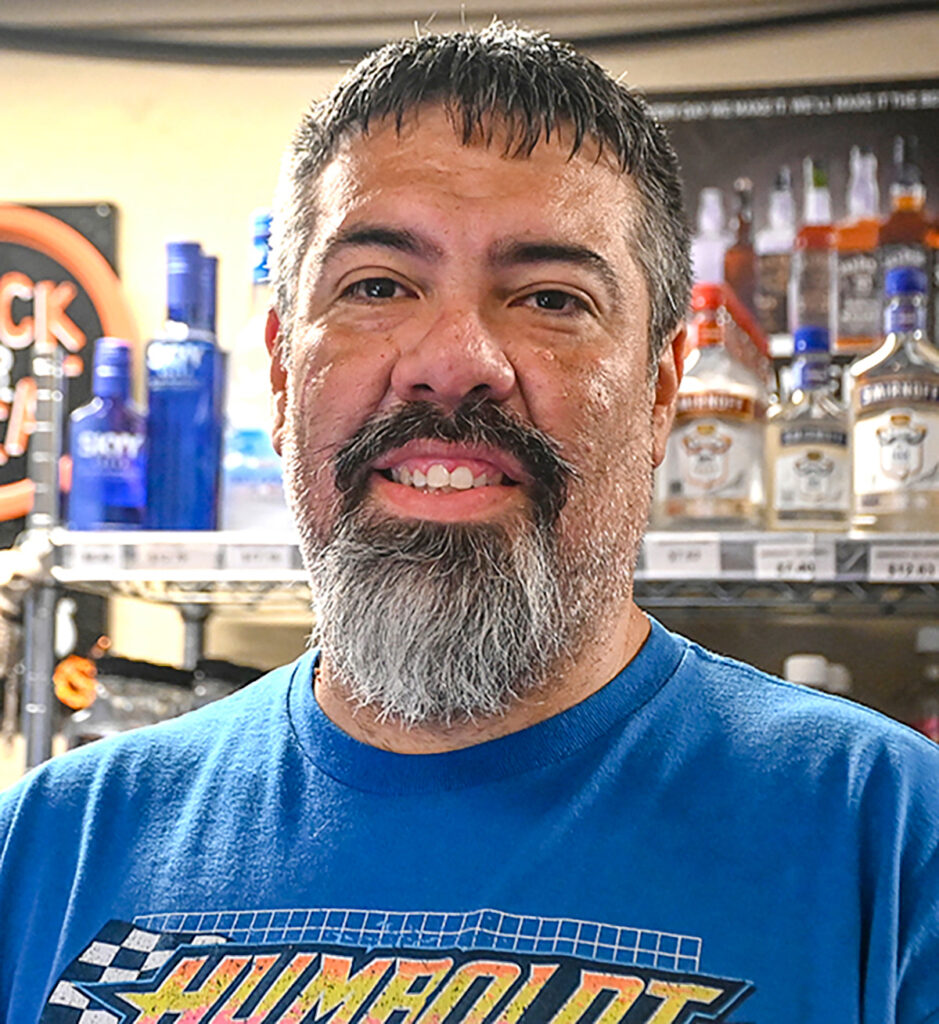
Brian Shaughnessy
BRIANSHAUGHNESSY, owner of O’Shaughnessy Liquor in Iola, supports the proposal. His son, Sage Shaughnessy, is a paramedic with the Iola Fire Department.
“We need this funding,” Shaughnessy said. “We need a reliable EMS service.”
Shaughnessy said access to dependable emergency medical services can influence whether people choose to relocate to a community. “A lot of people don’t want to relocate to a place where if you get hurt, you don’t know what to do,” he said.
He believes a sales tax is a relatively manageable way to spread the cost among residents and visitors. “Sales tax is probably one of the easiest taxes to swallow,” Shaughnessy said. “Most of the time, you don’t even notice it.”
He welcomes any measure that eases the burden on property owners. However, Shaughnessy said voters need clearer information about how the money would be spent — and assurances that the additional revenue would, in fact, go toward EMS.
He believes the previous proposal failed in 2024, at least in part, because voters did not receive enough information. “I feel like it kind of jumped on the ballot without a lot of talk,” he said. “It just was not explained to people. It was like people got to the ballot box and went, ‘What’s this?’”
Shaughnessy said the county should provide statistics, explain how the tax would affect household budgets, and specify how the money would be used.
“I think they should just clarify,” he said. “A lot of people have this preconceived notion that their money just goes wherever.”
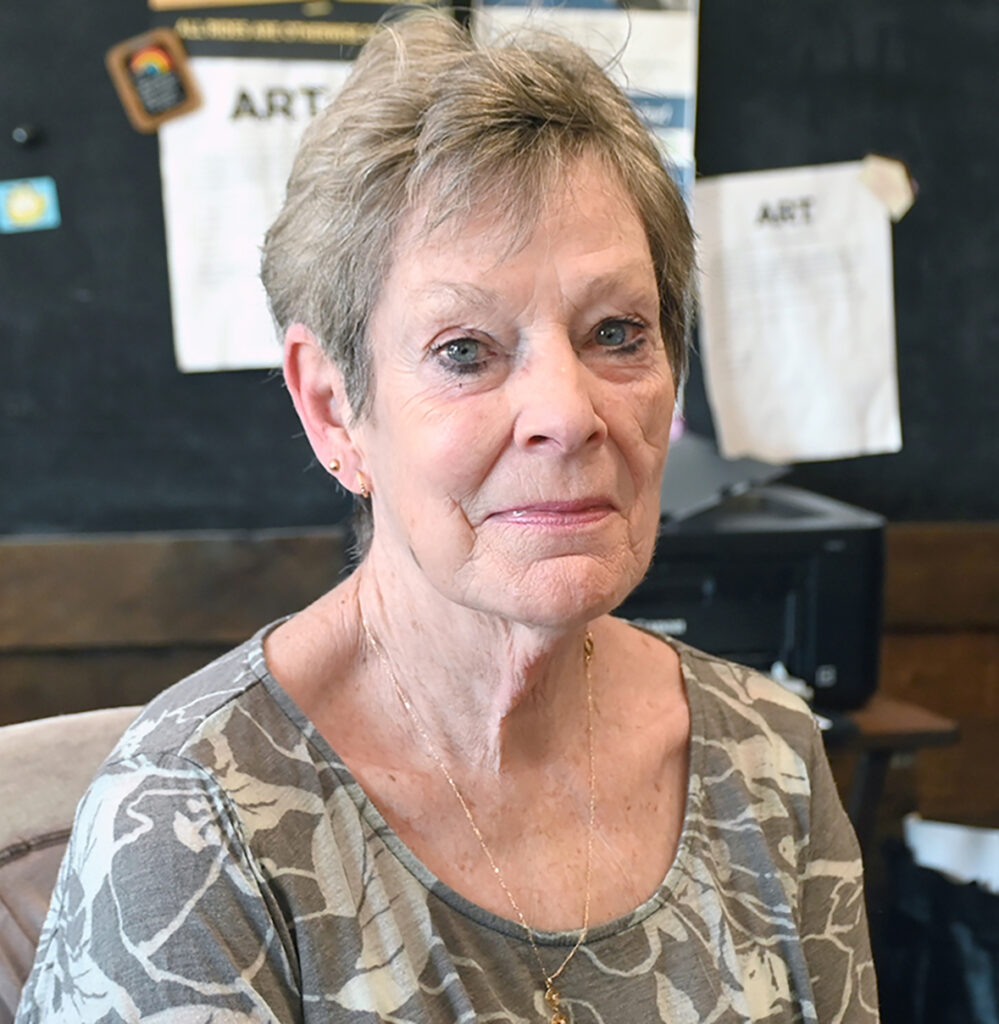
Georgia Masterson
GEORGIAMASTERSON of Humanity House, an Iola-based organization that assists lower-income families in Allen County, sees the issue from a different perspective.
Masterson said emergency medical services are necessary, but she is concerned about the effect of a sales tax on people who have the least ability to absorb additional expenses.
“Our EMS service is badly needed,” Masterson said, “but a sales tax targets those least able to afford it.”
Unlike a property tax, which is tied to property ownership, a sales tax is collected on taxable purchases. That means households with limited incomes face additional costs as they buy the goods and services they need, including groceries.
“They’re going to be hit with an increase in cost,” Masterson said. “It will hurt them the most.”
Her concern touches on an important question facing voters — whether spreading the cost of EMS across taxable purchases is a fair way to fund the service, or if it places a disproportionate burden on households already struggling to make ends meet.
Colter Whiting
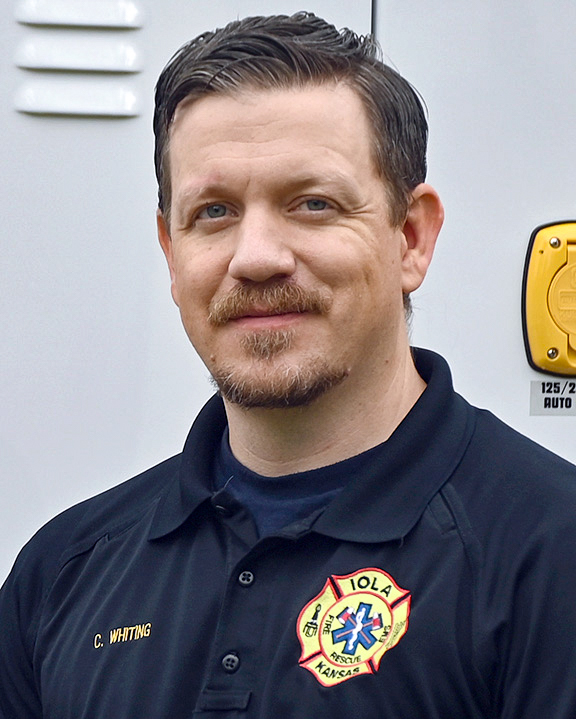
COLTER WHITING, Allen County’s new EMS director, in a recent interview echoed Patton’s concerns about a paramedic shortage. However, he stopped short of endorsing or opposing the proposed half-cent sales tax.
“I am not going to speak towards the sales tax,” Whiting said. “That is not my purview. As far as I’m concerned, when I am in this role, I have no political affiliation whatsoever.”
Whiting sees first-hand the expense of running an emergency medical service. “When it comes to the cost of an ambulance service, it is expensive,” he said. “Inflation has risen. It has driven the cost of everything we have up. We are not designed or implemented for the person who has an upper respiratory infection. We are designed and implemented for the day that you are literally dying.”
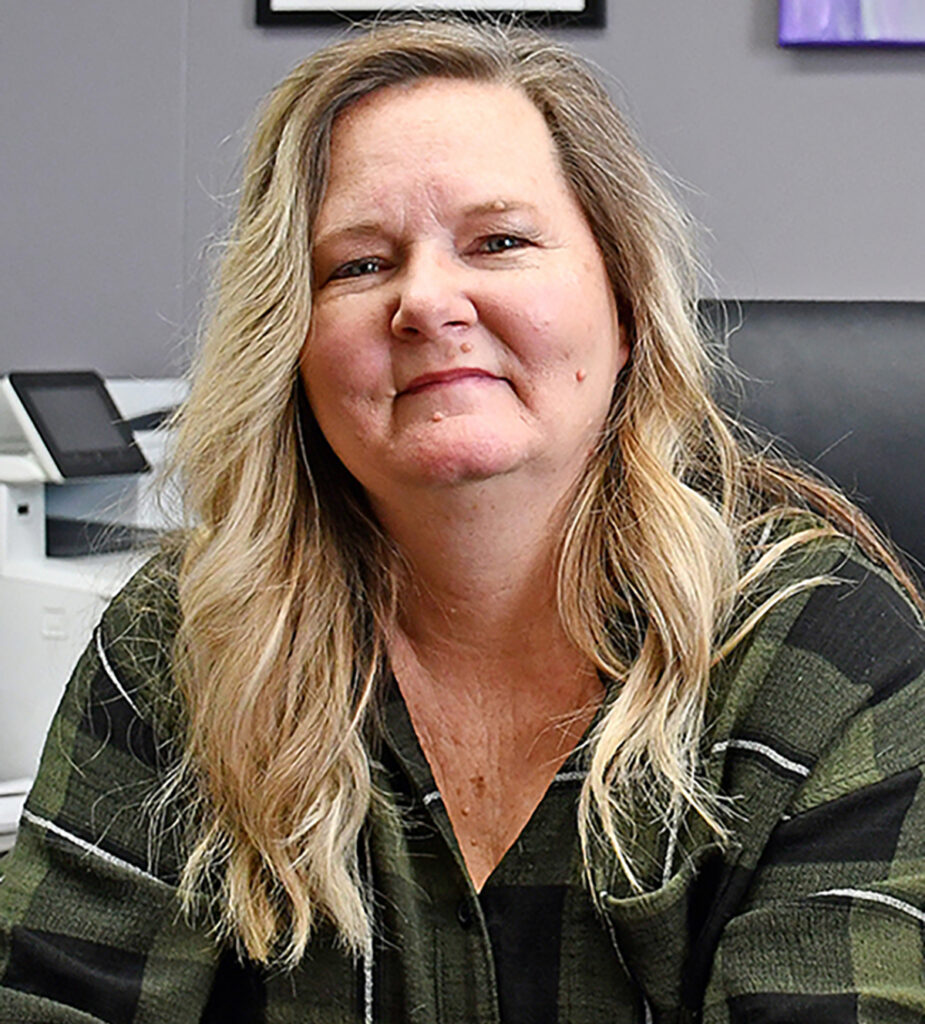
Gari Korte
GARI KORTE, owner and broker of Infinity Real Estate LLC, said lower property taxes would be a boost for the real estate market and prospective homeowners.
“Property taxes are killing real estate,” Korte said.
Korte said the additional half-cent sales tax wouldn’t have much effect on most consumers, particularly if it resulted in lower property taxes. But Korte expressed reservations about whether commissioners would follow through on that potential reduction.
“My hesitation is I feel like they’re saying that to get people to approve it, and it’s not certain whether they’ll follow through or not,” Korte said.
She also questioned how the county would use the additional revenue, asking whether it would go toward new equipment, better pay or other expenses.
Although Korte supports efforts to lower property taxes, she said the public’s lack of confidence in county officials could undermine the proposal. “I feel like it’s going to get voted down again,” Korte said, “even though I would love to see something that helps property taxes be lowered.”
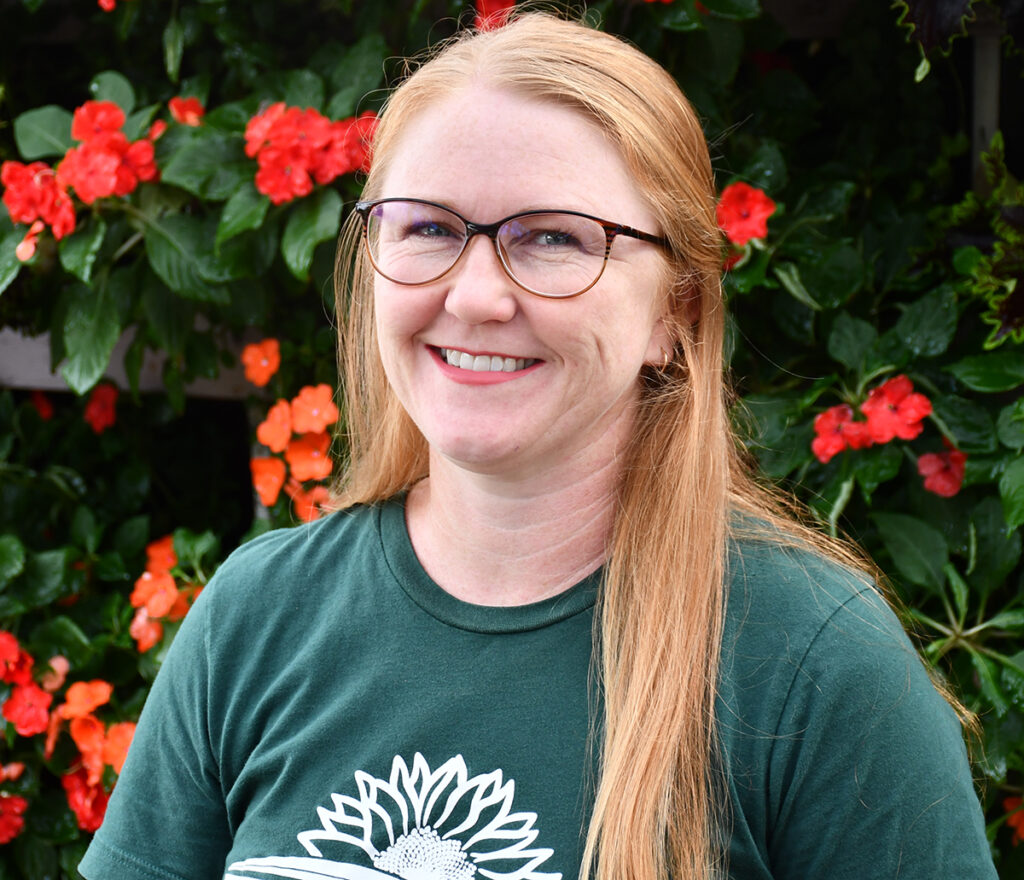
Savannah Flory
CONSIDER Savannah Flory of LaHarpe a skeptical supporter.
“I’m not a ringing endorsement either way,” Flory told the Register. “I think I’m just like everybody else — exhausted by the EMS talk. It’s probably the better option for now, but I don’t think we should rely on it as a long-term solution.”
Flory and her husband Levi own TLC Garden Center of LaHarpe. Last year, the couple celebrated 25 years at the helm. They have three daughters, the oldest of whom is a freshman at Iola High School.
Flory expressed some concern about the sales tax proposal’s impact on local business. “If this passes, I know LaHarpe and Humboldt have some pretty high sales tax rates already, so they would go up.” That said, “not many customers pay attention to sales tax,” she noted.
The idea of capturing revenue from a broader population base appealed to Flory. “It is one way to help get funding from people outside Allen County, from people who live outside the county but work here or shop here, versus a property tax that just affects Allen County residents. It spreads it out a little bit more,” she said. “I know property tax has been a hot-button issue lately.”
That said, Flory remains clear-eyed about the road ahead. “My wish is that they could promise property taxes would go down, but they can’t do that. And that’s what concerns me,” she said.
“I will probably vote for it, but I think we really need to focus on increasing our housing stock to broaden the tax base. We can only raise things so much before we price everyone out.”
How EMS is funded
Allen County’s EMS system currently relies on its ambulance fund. In 2025, the ambulance fund received approximately $1.04 million from a 5.703-mill property tax levy, accounting for about half of its income. The remaining funding comes from motor vehicle taxes as well as insurance reimbursements and patient payments.
That structure differs from flyers recently released by county commissioners.
“Right now, homeowners, business owners and farmers pay the full cost of EMS services through the property tax,” reads an October press release from the commission.
That is incorrect. In 2025, motor vehicle taxes were 5% of the ambulance fund’s revenue, while insurance and patient payments were $859,257.52, around 43%.
In August, commissioners agreed to a $5,000 contract with lobbyist Mike Taylor of Kansas City to conduct a public information campaign about the proposed half-cent sales tax.
Overall sales tax picture
The county’s existing sales tax rate is 1.25%, consisting of a quarter-cent tax for Allen County Regional Hospital, a half-cent tax for the landfill and a half-cent tax for the county’s general fund.
If approved, the additional half-cent would bring the county’s sales tax rate to 1.75%. Combined with the state’s 6.5% sales tax and Iola’s 1% sales tax, purchases in Iola would be subject to a total sales tax rate of 9.25%, up from 8.75%. Humboldt’s tax rate would rise to 10%.
Commission Chairman David Lee said voters should have the opportunity to decide whether they want the proposed funding change.
“I’m very comfortable with putting this before the citizens of Allen County and letting them decide if this is something they want,” Lee said in information released by the county. “They could vote no. They could vote yes. But we are giving them that opportunity.”
Commissioners have scheduled six public forums to discuss the issue. On Tuesday, Oct. 20, Commissioner David Lee will lead a discussion in Mildred after Thrive Allen County’s previously scheduled community conversation. He will hold question-and-answer sessions in Iola on Oct. 22, Savonburg on Oct. 26, Moran on Oct. 28 and Carlyle on Oct. 29. Commissioner Jerry Daniels will hold an Oct. 27 discussion in Humboldt.
WITH advance voting already underway and Election Day less than three weeks away, voters are faced with a decision. The outcome may depend in part on whether the county can clearly explain its funding needs, give some assurances on how the additional revenue would be spent, and what the proposal could mean for taxpayers.
Sarah Haney
Sarah joined the Register in November 2023.
With 13 years of experience in journalism, she is a 2009 graduate of Cottey College, in Nevada, Mo with a degree in English.
Upon graduating, she began her career in journalism at her hometown paper in 2010. Over the next 13 years (and a brief hiatus to Fayetteville, Ark.), she worked her way up to the position of editor and enjoyed the connections she built within her community.
Sarah is a member of Rotary Club International and the P.E.O. Sisterhood. She enjoys reading, listening to her vinyl records, and spending time with family and friends.
The Iola Register needs your voice. We welcome your on-topic commentary. Comments are moderated for civility. Please read our Comment Policy before commenting.





Leave a Reply
You must be logged in to post a comment.