For generations, breast cancer was something most women thought about after 40 — a conversation to have “someday.” But today, “someday” is coming sooner than anyone expected. More and more women in their 30s and younger are hearing the words no one ever wants to hear: “You have breast cancer.”
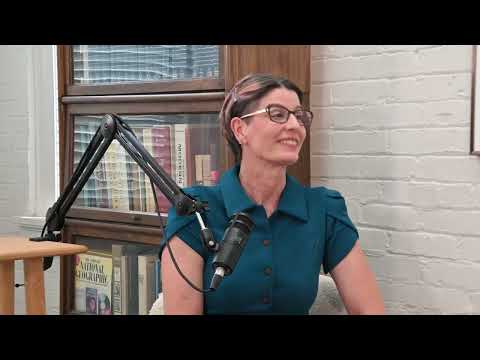
“It’s not your imagination,” said Dr. Mary Mitchell, Department Chief of Breast Radiology at Saint Luke’s Cancer Institute. “There have been statistics that have come out in the past year or so that do show a steeper rise in the rate of breast cancer in younger women, specifically women under the age of 50.”
That rise runs counter to previous patterns, where most diagnoses occurred after menopause. According to the Breast Cancer Research Foundation (BCRF), the incidence of breast cancer in women under 50 has been increasing by about 1.4% each year for the past decade. Data from Columbia University’s Mailman School of Public Health similarly show a state-by-state uptick in early-onset breast cancer between 2001 and 2020, particularly among women in their 30s.
Why is it happening?
Dr. Mitchell points to several possible factors. While researchers continue to study the trend, a few stand out.
“One could certainly be the fact that a lot of women have been delaying their childbearing years,” she said. “We know that our risk for breast cancer can increase if we wait to have our first child until after the age of 30 or certainly 35.”
Another key factor, she explained, is the rise in obesity. “Nearly three-quarters of adults are overweight or obese,” she said. “Any excess body fat can produce extra estrogen in the body, and that can certainly have some contribution.”
Environmental exposures may also play a role. As Dr. Mitchell notes, “it’s not really known as far as possible environmental exposures, but they could play into it.”
DESPITE THE growing concern, many women under 40 aren’t screened because current guidelines recommend routine mammograms beginning at age 40. But Dr. Mitchell stresses the importance of earlier conversations.
“By the age of 25, it would be ideal if every woman could have a conversation with their gynecologist or primary care provider to determine if they’re at high risk,” she said.
That risk increases if a woman has a first-degree relative, such as a mother or sister, with breast cancer. Other risk factors include a history of chest radiation, such as treatment for Hodgkin’s lymphoma in early adulthood.
Even for those not considered high risk, Dr. Mitchell advises vigilance: “Be breast aware. Know what’s normal for you. If you notice a lump, pain in one breast, or skin changes, bring it to your provider’s attention. We can do breast imaging at any age.”
For women ready for screening, new technology has changed the game. Allen County Regional Hospital now offers 3D mammography, also known as tomosynthesis, and the images are read by fellowship-trained breast radiologists like Dr. Mitchell.
“3D mammograms are a better mammogram than what we had before,” she said. “With traditional 2D mammograms, we were getting just two images of each breast. With 3D, we can get hundreds of images through that breast tissue. It allows us to scroll through layer by layer, finding smaller cancers earlier and reducing false positives.”
The best part, she said, is that 3D mammography is well-covered by insurance. “It’s really becoming the standard,” she noted.
SINCE mammography became widespread, breast cancer deaths have dropped by nearly 40%, according to the American College of Radiology. A JAMA study published in 2024 found that screening, along with advances in treatment, has helped reduce U.S. breast cancer mortality by nearly 60% since the 1970s.