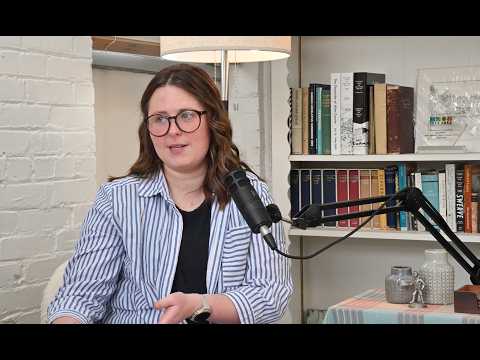
Helen Rogers turns in her apron at Iola Elementary School today. Over about 20 years, Rogers has served thousands of meals to Iola children. She’s wiped their noses, given them hugs, tied their shoes and been a constant, sunny presence when they step into the cafeteria. But, as Rogers says, all good things must come to an end.
“I think it’s time,” Rogers says. “I’ll be 86 in August. The little ones, I know I’ll miss them. I already miss them now.”
For Rogers, children bring a light few other things in life can match. Her work has given her an opportunity to not just feed children, but to guide them.
“I’ve so enjoyed working with the children. Life is good. You have to look at how you are here to be a blessing to others. I always tell the children, ‘Our light isn’t very good. But God’s light is so bright, it will always get you through.’”
And while she may be retiring, Rogers has no plans to stop taking care of her brood.
“I live right here in Iola,” she says with a smile. “I’ll come back and check on them. And I always go to the ball games. People have asked me if I have kids playing. I say, ‘No, not really. But some parents can’t come. And if these kids know they are being cheered on, it makes them feel good.’ We have to think about how kids feel. We have to let them know we love them.”
OVER THE YEARS, Rogers remembers most vividly her time with Lillian Orzechowski at Lincoln Elementary School. Orzechowski passed away Feb. 26 this year.
Orzechowski was born in Poland in 1928. During World War II, she was sent to Germany where she worked in a Nazi labor camp. Orzechowski met her future husband, Ted, at a displaced persons camp after the war. They married in 1946 and immigrated to the United States in 1949, eventually landing in Iola.
“Lillian was strict,” she recalls. “She would always say to me, ‘You’re here to work. You get paid to work, so you’ll learn to work. God gave you two hands, so you’ll use both hands.’”
Orzechowski did not tolerate idleness, Rogers recalls. But along with her thick accent, Rogers says, she had a tremendous heart.
“Oh, she just loved the kids. She always had lots of combs and brushes and washcloths. One day I asked her what she was doing. She would wash their little faces and hands and comb their hair. She just looked at me and said, ‘See how pretty they are?’
“She would take the washcloths home and wash them,” Rogers said. “She had even made a little stove to keep the food hot for the kids. She had made three little ovens to keep the pans of food warm before serving.”
BORN IN 1940, Rogers keenly remembers a segregated childhood.
“When I was a little girl, I made my grandmother lose her job,” Rogers recalls. “At the time, Black people had to go to the back door for everything.” Her grandma had asked her to help clean the home where she worked, but Rogers insisted on going in the front door.
“I went to the front door. I didn’t go to the back door,” she said. “I told my grandma, ‘If I’m good enough to clean her house, I’m good enough to go to the front door.’”
The white homeowners fired Rogers’s grandma for the offense. Months later, her grandma was hired back on, but the memory has stuck with Rogers.