Groundwater in parts of Kansas is so polluted it can replace some fertilizer

In some parts of Kansas, groundwater is polluted with enough nitrates that it can fulfill some of the fertilizing needs for farmers.
By

State News

July 2, 2026 - 1:24 PM

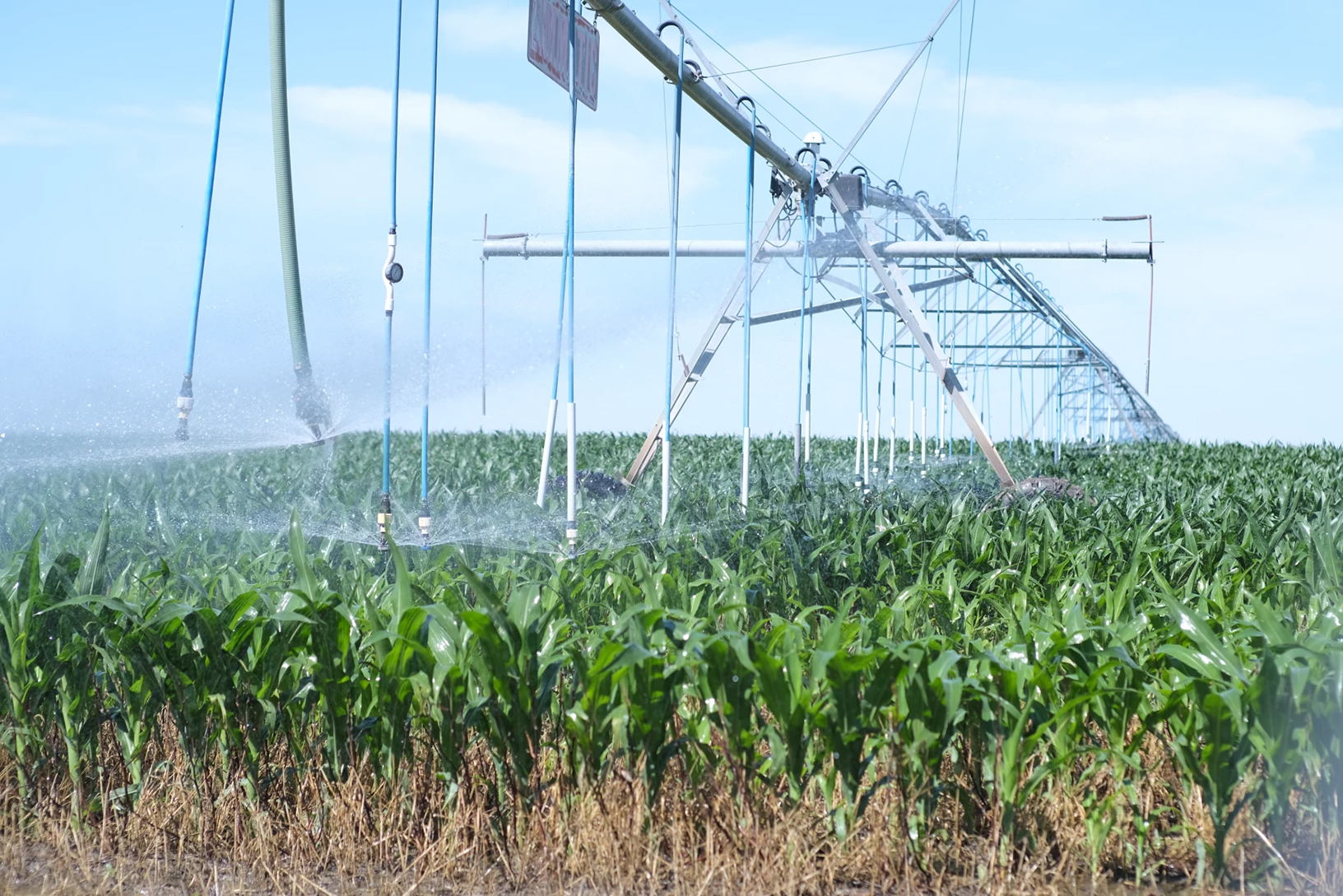
A center pivot sprinkler pumping water on crops in southwest Kansas. Photo by Calen Moore / Kansas News Service / kmuw.org

In parts of Kansas, decades of farming and irrigation have left groundwater polluted with enough nitrates that it can be used in place of some of a farmer’s fertilizer.

In a year with high input costs and low yields, farmers need to get creative with cost cutting. The polluted groundwater could be a trick up their sleeve to save on fertilizer costs.

Of course, pollution also comes with downsides, and experts warn that the nitrate-laden groundwater could have impacts on people’s health. But they hope testing irrigation wells might lead to farmers thinking about the quality of their drinking water.

Kansas farms need literal tons of fertilizer to produce crops. Since 2020, fertilizer made up 33% to 44% of corn operating costs and 34% to 45% of wheat operating costs.

Dorivar Ruiz Diaz is a professor of soil fertility and managing nutrients at Kansas State University. He said Kansas crops need nutrients like nitrogen to produce at a high level.

“Good yielding corn, it could need 180 to over 200 pounds of nitrogen (per acre),” Ruiz Diaz said.

Things like nitrogen, sulfur and chloride used to be naturally present in soils across the prairie. But after decades of maximizing crop growth, those nutrients started disappearing. Now, farmers need to help the soil by adding nutrients back in.

Those years of optimizing crop production have led groundwater nitrate levels to reach up to five times what is considered safe.

“The reason why we have so much nitrates in the groundwater is because it’s mobile. It’s a nutrient that moves with the water,” Ruiz Diaz said.

As farmers in drier parts of Kansas apply fertilizer and then irrigate, those nutrients leach down into the water underground. The mega feedlots that dot western and central Kansas also add more manure onto the ground, contributing to nitrate levels rising

While that poses a health risk for rural residents, farmers can use this problem to their advantage.

On this map from the U.S. Geological Survey, areas in red are those where scientific modeling suggests the shallow groundwater has likely become contaminated with higher nitrate levels than the EPA considers safe to drink.

By checking their irrigation water for nitrate levels, farmers can save thousands of pounds of additional fertilizer since their water already has those nutrients.

Nathan Nelson, soil fertility professor with Kansas State University, said he encourages farmers to check their nitrate levels because this helps them financially, but it also helps the environment.

“They can reduce the fertilizer bill and the fertilizer cost,” he said. “At the same time, by doing that, we’ll reduce nitrogen leaching and in the future we will have cleaner water.”

Nitrogen fertilizer prices have increased sharply during the hostilities with Iran. Prices rose further as the conflict escalated with the closure of the Strait of Hormuz — a critical shipping route for energy and nitrogen fertilizers.

Prior to the conflict, anhydrous ammonia averaged $828 per ton. By this spring, the USDA Agricultural Marketing Service reported a price of $1,123 per ton.

Related
January 28, 2025
December 29, 2023
December 6, 2023
July 12, 2021