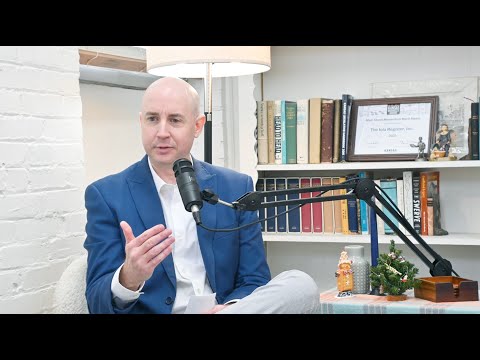
Rep. Fred Gardner said his foremost goal for the upcoming legislative session, which begins Monday, is to ensure his rural 9th District receives its share of $221 million in federal funds recently designated to Kansas to support rural health care.
Gardner, who serves on the legislature’s Health and Human Services Committee, said he’s going to do his best to ensure the funds “are directed to rural hospitals” and not their urban counterparts. He’s also adamant the funds are not just “a subsidy,” but are used to create “a sustainable plan.”
“We need to come up with an economic model where we have enough patients coming in the door,” to adequately support rural hospitals, he said.
“That’s not achievable in parts of the state facing steep population declines,” he said Tuesday, adding the 9th District’s population “is stable.”
The funds are part of the federal government’s “big, beautiful bill” passed in July, giving the Centers for Medicare and Medicaid Services $50 billion over the next five years to support rural hospitals and medical facilities.
Gardner said the committee will also address Medicare fraud “and whether we have a problem with it.”
“I think we have problems; it’s just a matter of how much. Any time you have a program that’s approaching $6 billion, well, there’s bound to be money that’s not getting allocated appropriately,” he said.
Water issues
Though the Ogallala Aquifer and its steady depletion grab all the headlines, Gardner said Southeast Kansans need to be aware of all the ways water affects our daily lives.
“Water includes not only groundwater, but fresh water and wastewater. We have to make sure wastewater is treated appropriately, so we don’t contaminate our streams, rivers, and groundwater. It involves conservation, to ensure we’re not contaminating the runoff off fields.”
But Gardner’s biggest concern is the growing level of silt in Kansas’ reservoirs, including John Redmond in Coffey County, and from which flows through the Neosho River.
“John Redmond is approximately half full of silt,” he said.
At Tuttle Creek Reservoir, engineers are successfully using a water injection dredging to reduce its silt levels.
Gardner said that process isn’t feasible at John Redmond “because the gates are too high. The dam’s gates need to be down at the bottom of the reservoir.”
Gardner said engineers are now considering a “hydro-suction system,” to remove some of the silt.
“Silt is not an evil thing,” Gardner clarified. “In fact, a lack of silt is one of the main causes of all the erosion occurring along stream banks downstream. And fish and invertebrates need the cloudy water caused by silt to survive.”
“Silt is not our enemy, but it needs to be controlled appropriately, and we’re trapping it in our reservoirs all around the world,” he said.