As real estate prices continue to rise in Kansas, many people are turning to manufactured housing because they are less expensive to build, averaging about $123,000 per home. About 4% of Kansans live in these modular homes.
Some officials see them as one solution to building more affordable housing. The U.S. Department of Housing and Urban Development has recently proposed rule changes to expand the definition of a manufactured home and encourage multi-story manufactured housing construction.
It’s also housing that can be overlooked. For example, many of these manufactured housing communities lack access to storm shelters. In Kansas, requirements vary by city for storm shelters at these communities. This can leave residents with no place to go when a storm approaches.
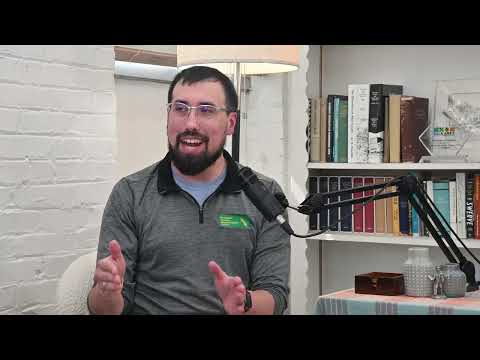
Reese Greenlee is an assistant professor of architecture at Kansas State University. When he moved to Kansas, he said the lack of publicly available storm shelters in the state stuck out.
Greenlee said while more than 20 million people live in manufactured homes across the country, architects have sometimes ignored them. They might not devote time to building important resources, like storm shelters, in these communities because they’re often in out-of-the-way locations or are perceived as “cheap” housing.

“Unfortunately, manufactured housing has really been stigmatized culturally, and so architecture has kind of overlooked it,” he said. “That’s where my research starts, looking at them as a significant American housing landscape.”
Greenlee started working with Shelby Doyle, associate professor of architecture at Iowa State University, and researchers at Iowa State’s Computation and Construction Lab on a solution.
They are currently exploring whether shelters made from 3D-printed concrete bricks can be effective for these communities.
Traditionally, storm shelters have a concrete shell surrounding a steel or a reinforced concrete structure. They can be expensive to build for something that might only be used once a year, or less.
But Greenlee is researching whether a shelter made from unreinforced concrete blocks can withstand tornado-force winds and be cost efficient. He said concrete alone is not used enough in structures like shelters.
“Let’s push this material as far as we can and see what can come out of it and hopefully contribute something to research that potentially could be used in the future,” Greenlee said.
Reese Greenlee’s concrete blocks are 3D printed in a coil structure.
In general, 3D-printed concrete has several advantages. It’s increasingly being used in construction for homes and businesses. There can be cost savings, with less waste and labor. And the concrete can be formed into many different shapes and sizes, unlike the square concrete block structures usually built.
That flexible shape is what gives Greenlee’s blocks their strength. These blocks are shaped more like repeating coils, which Greenlee said looks like strips of solid material running the height of the shelter.
“That geometry helps with deflecting impact debris,” Greenlee said. “In the direction that the material is being laid, there’s this interesting dynamic property that we’ll be testing through Federal Emergency Management Agency’s impact load testing for storm shelters.”
Since he’s currently in the research phase, Greenlee said he is still exploring whether the blocks will meet FEMA’s standards for tornado shelters. And it remains to be seen if this method is more cost efficient, he said.