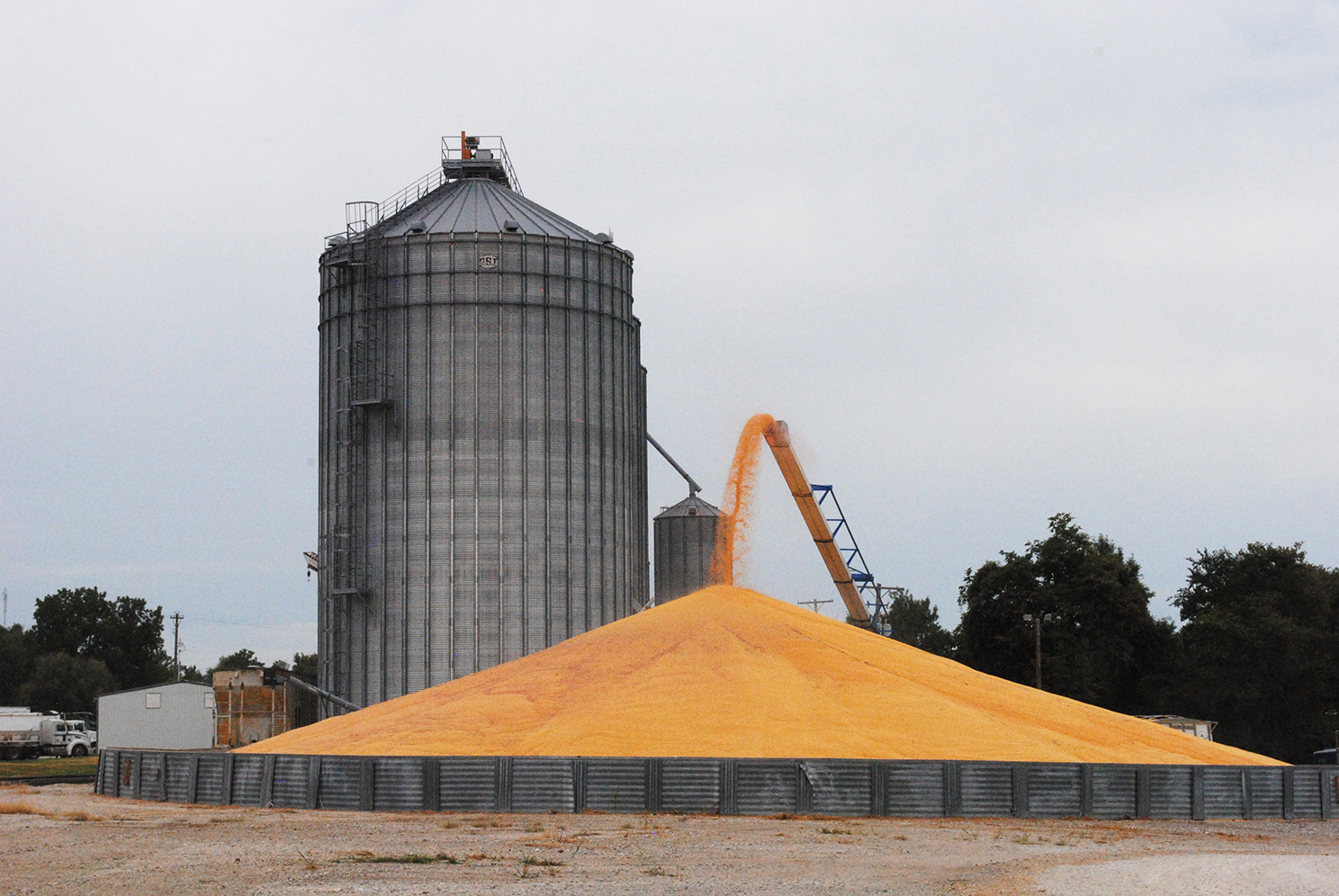
Though prolonged hot and dry weather have had a visible effect on the area’s two main cash crops, corn and soybeans, local farmers are saying the corn harvest is going well to exceptionally well, said Gary Beachner, Parsons, owner of Beachner Grain, which has an elevator and storage tanks in Humboldt.
“The corn harvest has picked up considerably the last four or five days,” Beachner said Tuesday. Corn currently fetches $4.50 a bushel.
“Test weights and moisture content of corn have been really good,” Beacher said, one silver lining of the otherwise abominable weather.
Any ride through the country is punctuated by lumbering combines kicking up clouds of dust and leaving empty stalks in their wake.
The soybean picture isn’t as encouraging, even though it fetches about double that of corn per bushel.
“Soybeans (production) are all over the place,” Beachner said. “The jury is still out, and some are even being baled for hay.” Farmers think it is better to get something out of the crop rather than give it up altogether.
Soybeans have been genetically altered to withstand hot weather and drought, but that feature can maintain itself only so long.
The story is similar at the Le Roy Co-op, where Miles Mentzer is manager. Yates Center, Gridley and Westphalia facilities are associated with Le Roy’s.
The corn harvest was a little behind in Le Roy, apparently because of a difference in weather patterns, but “we’re in full swing now,” Mentzer told the Register this week. “I’m more worried about late-planted corn,” which needs rain soon … very soon.
“Corn yields have been good to better than expected,” Mentzer said. “It’s the late-planted corn, as well as soybeans, that are of concern because of the heat and drought.”
The Le Roy co-op buys 2 million bushels of corn a year, Mentzer said.
Corn planted in early April has done best due to abundant moisture. In June, corn rapidly approached maturity, with ears forming and then filling husks with nice-sized ears. The first sign that harvest is near is when the ears start to tip over from plant stems. This month they had completed their journeys, nature’s way of protecting ears from rainwater collecting in the husks and damaging kernels.
Corn seed put in the ground later didn’t have that advantage in these parts. Rainfall this season has been spotty at best.
The north part of Allen County, for example, received rain of an inch or more in mid-July, the last rain of any consequence.
Corn harvested to date undoubtedly will register the best yields.
THE PROLONGED hot, dry weather isn’t what farmers hoped for regarding soybeans.