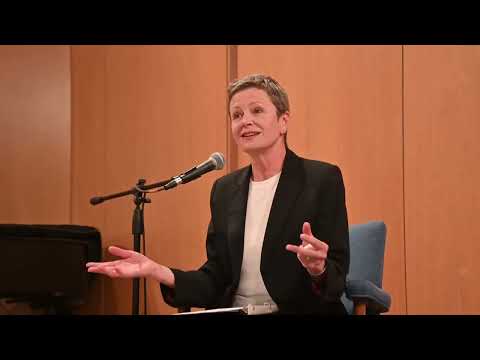
Fifth-generation Pratt County farmer Mark Fincham brought a candid look at the challenges and changes on his family operation to the Southeast Kansas Soil Health Conference Wednesday afternoon, held at Green Cover Seed in Iola.
Fincham, who owns and operates Heartland Family Farms, took part in a panel focused on regenerative cropping practices. He outlined the issues that pushed him away from conventional methods to steps that rebuild soil health.
Fincham, who farms in Pratt and Stafford counties, grows wheat, beans, milo, corn, cotton and has dabbled with some hemp in the rotation.
About one-third of the farm is irrigated, with the remaining two-thirds in dryland production. Fincham described their farm as “on the regenerative side,” with a growing emphasis on improving dryland performance.
FINCHAM SAID the push toward being regenerative came when they realized their soils were deteriorating.
“Our soil structure was declining and our organic matter was going away,” he said. The problems were most visible in wheat fields, where structure loss prevented their drill from covering seed properly. Erosion was increasing as well. “It was getting worse and not better over time,” he said.
Compounding the concern was their high dependency on commercial fertilizers and chemistry, along with weed pressure they struggled to control. “With all of that, that pretty much pushed us to look at something different.”
Fincham and his farming team immersed themselves in conferences, books and podcasts.
Fincham said listening to Gabe Brown’s “Dirt to Soil” audiobook got him to really tune in and think differently about regenerative agriculture. 
“I began unlearning some of the things that I had practiced and known all my life,” he said.
All of that information pointed them toward soil biology. “We decided that the thing we needed to focus on was our soil health, our microbial activity, and our nutrient cycle,” he said. But when they sat down to run the numbers, he noted that “the math was just not working for us,” pushing them to consider more dramatic changes.
ONE OF those steps was creating what Fincham calls “the war room,” centered on a large whiteboard for mapping field timelines and equipment needs. The system allowed them to track rotations five years at a time. “It was a better way to visualize it,” he said.
The planning also prompted a major equipment shift. “We were going to sell all the tillage equipment, and we were going to buy a no-till drill,” he said.
Despite advice to transition slowly, the numbers pushed them to move immediately: “We converted the farm from most of it being full tillage to no-till in one year.”
With the equipment in place, Fincham began experimenting with cover crops. Initial attempts at rolling them down weren’t ideal. “It was okay. We didn’t like it,” he said. Standing cover crops produced better, he noted.
The cover crop mixes help boost carbon, organic matter and nitrogen fixation. Fincham noted that their area receives about 26 inches of annual rainfall, making covers especially valuable for moisture retention.