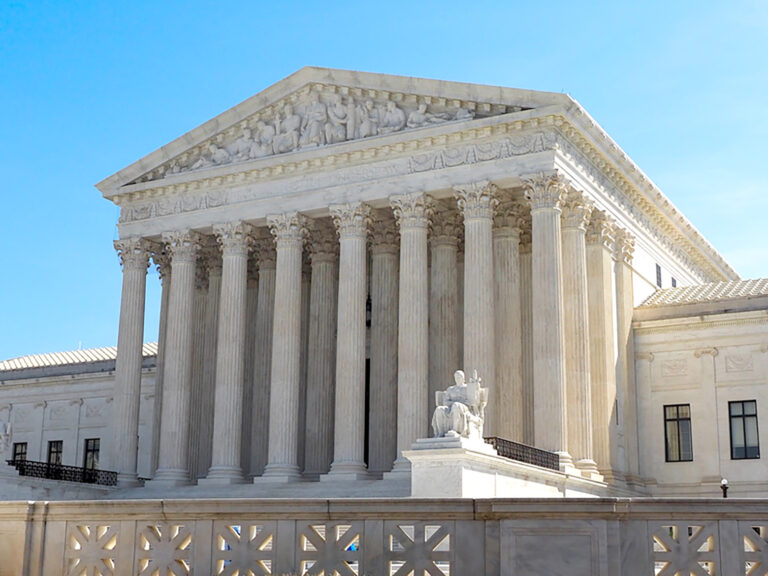
The Supreme Court has created a government run by a very small number of people who work at either the Supreme Court or the White House.
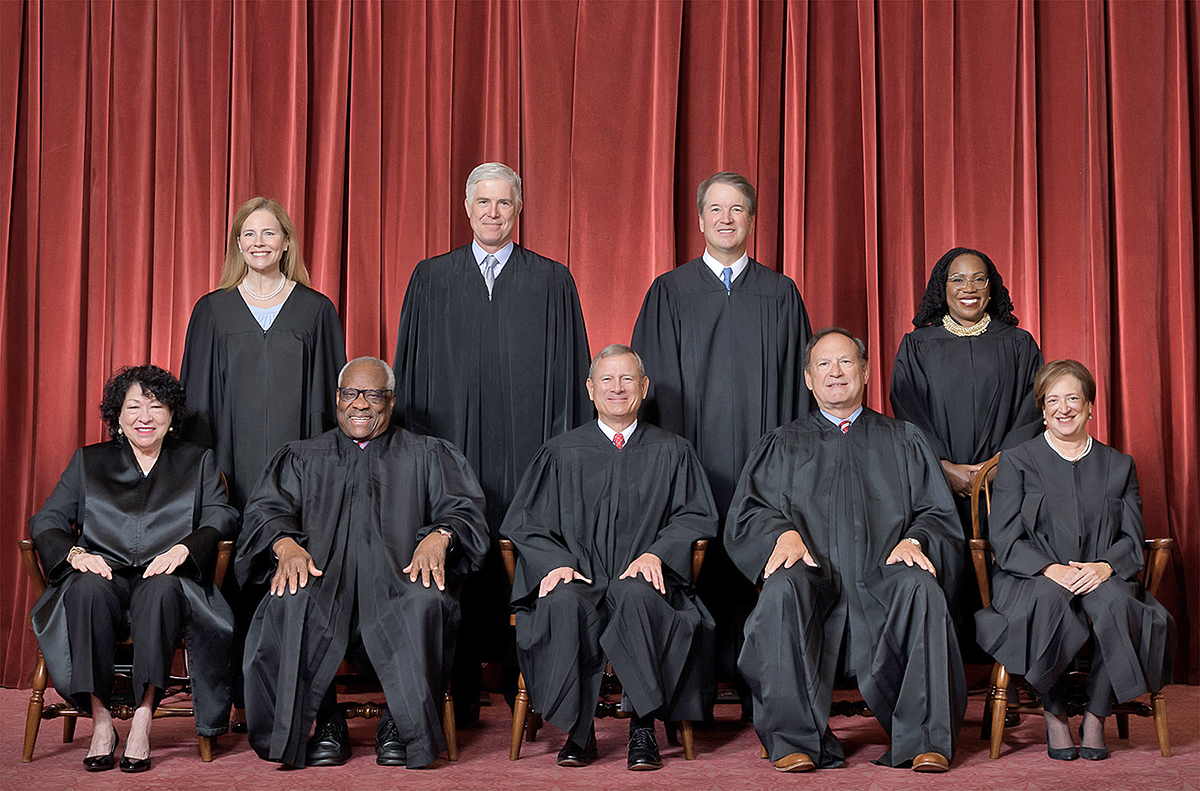
Serving on the U.S. Supreme Court are, front row from left, Associate Justices Sonia Sotomayor, Clarence Thomas, Chief Justice John G. Roberts, Jr., Associate Justices Samuel A. Alito, Jr. and Elena Kagan; back row, Associate Justices Amy Coney Barrett, Neil M. Gorsuch, Brett M. Kavanaugh and Ketanji Brown Jackson. PHOTO COURTESY OF THE SUPREME COURT HISTORICAL SOCIETY
The Supreme Court has created a government run by a very small number of people who work at either the Supreme Court or the White House.
For nearly a century, the Supreme Court has made it difficult for a president to defy the clear text of a law passed by Congress. The court prevented Franklin D. Roosevelt from firing a leader of the Federal Trade Commission in 1935. It stopped the Reagan administration from defying a pollution investigation in 1988. It helped block Barack Obama’s attempt to expand immigration protections in 2016.
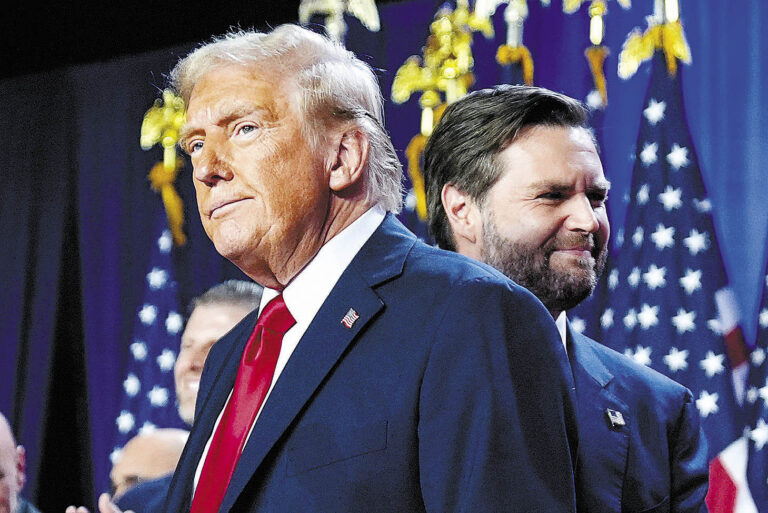
Its decision Monday allowing President Trump to fire F.T.C. commissioners represents a break with this history. The ruling dismisses longstanding precedent and effectively discards a 112-year-old law that said the president could fire commissioners only for “inefficiency, neglect of duty or malfeasance in office.” Mr. Trump can now fire commissioners in regulatory agencies simply because he wants to.
The majority opinion by Chief Justice John Roberts says that requiring presidents to have cause when they fire agency heads conflicts with the separation of powers in the Constitution. Because the Federal Trade Commission exercises executive power, it “must therefore be controlled by the chief executive,” Chief Justice Roberts wrote. The majority has decided that Congress erred when it tried to insulate the F.T.C. and a couple of dozen other agencies from partisan politics by stipulating that its leaders be semi-independent. The ruling happens to suit perfectly the view of President Trump, who has said that Article II of the Constitution gives him “the right to do whatever I want as president.”
The Iola Register needs your voice. We welcome your on-topic commentary. Comments are moderated for civility. Please read our Comment Policy before commenting.




Leave a Reply
You must be logged in to post a comment.